Drinking water analyses performed by an accredited laboratory
12.08.2025 | Salzgitter Flachstahl GmbH
The water department of Salzgitter Flachstahl's chemical laboratories analyzes over 200 drinking water samples every year. These take particularly high priority within the laboratories, given that in addition to supplying the industrial area itself, public consumers are also supplied with drinking water.
All the tests and sampling conducted are subject to the "Ordinance on the Quality of Water for Human Consumption (Drinking Water Ordinance - TrinkwV)" dated 20.06.2023. This comprehensive regulation stipulates how often, where and to what extent examinations must take place. In addition, the limit values to be observed and process parameters to be achieved, such as the determination limit and the maximum permissible measurement uncertainty, are specified for the individual parameters.
Accreditation in accordance with DIN EN ISO 17025:2018 is mandatory for notification as an approved laboratory for drinking water testing by the state of Lower Saxony and must be maintained in an ongoing manner. The requirements of the Drinking Water Ordinance must be complied with, and it must be ensured that the laboratory is capable of conducting the analyses competently. The performance of the analyses must be documented for quality assurance purposes for all procedures.
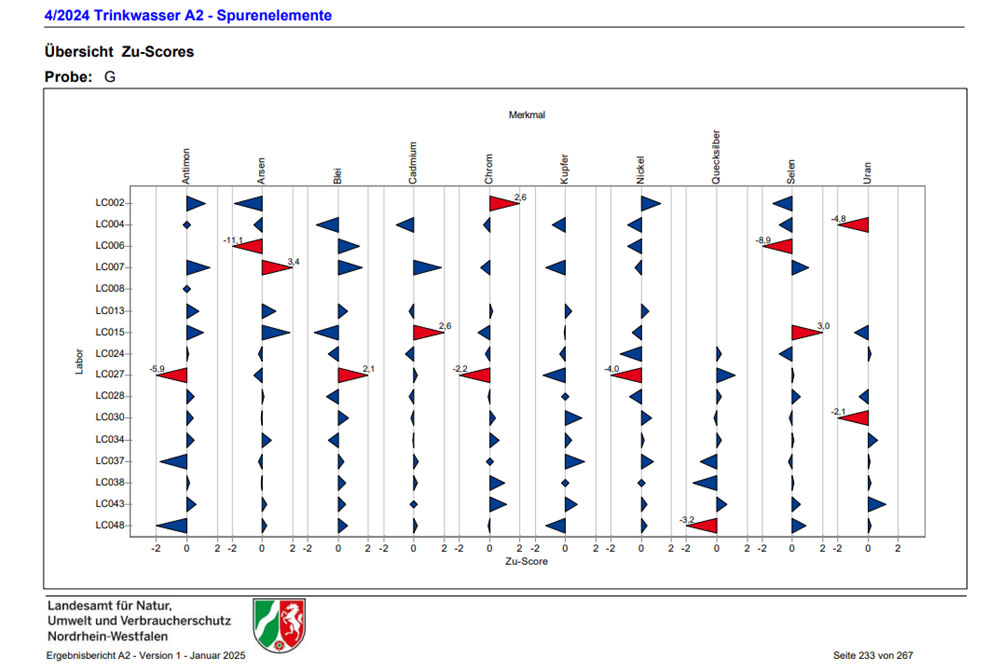
Salzgitter Flachstahl regularly takes part in round robin tests, among other things, in order to be able to prove transparently that these points are fulfilled. In the drinking water sector, these are mainly organized by the authorities themselves. Unknown samples are sent to the analyzing laboratory for analysis. The analysis and results must be submitted within the time specified. The organizer of the round robin proficiency test collects all the individual results, compares the individual laboratories and evaluates the quality of the results. The so-called z-score is a decisive factor here. A z-score of ±2 (see Figure 1) is the maximum permissible rating. Successful completion of these round robin proficiency tests is mandatory.
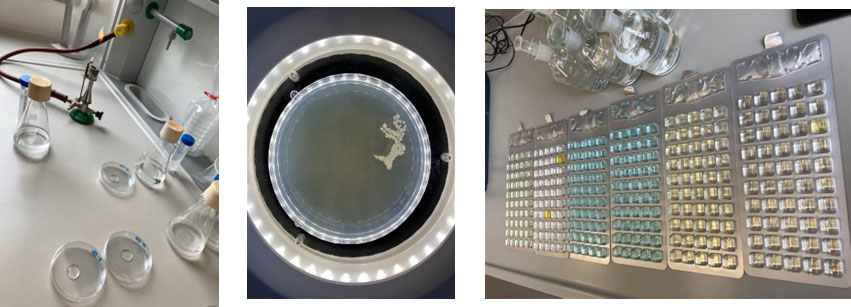
Microbiological testing of drinking water samples is a special sub-section of drinking water testing. For this purpose, the samples are tested in the laboratory for the organisms E. coli, coliform bacteria and enterococci. In addition, the colony counts are examined and analyzed in accordance with the requirements of TrinkwV §43 (3) . In determining colony numbers, the culture media and glassware are prepared and germination plates are prepared and incubated. In the final step, the plates are counted. This type of analysis calls for special analytical expertise.
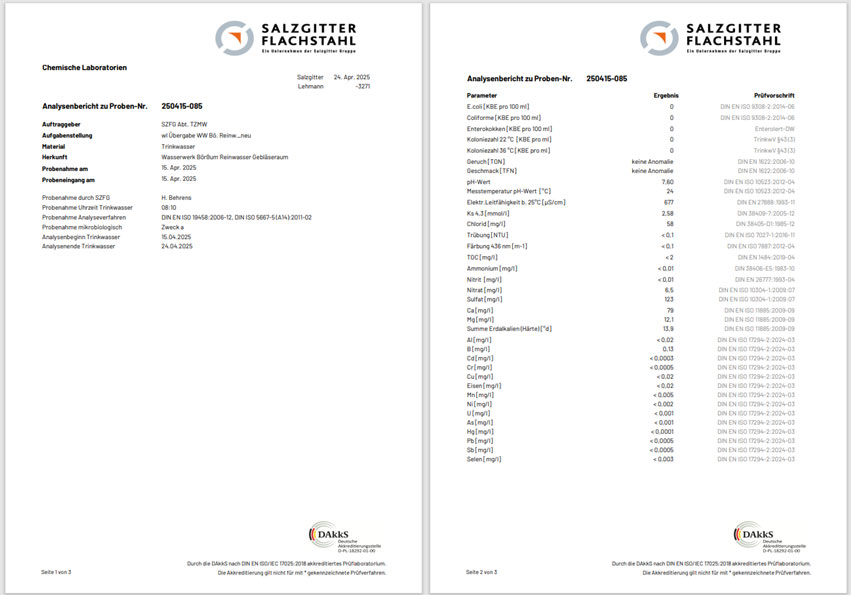
The entire sample management is handled by way of a laboratory information and management system (LIMS). A certain share of the measured values are finally calculated and saved here, while the relevant documents relating to the samples are stored. Finally, the system generates test reports that are distributed internally and externally to the responsible health authorities.